

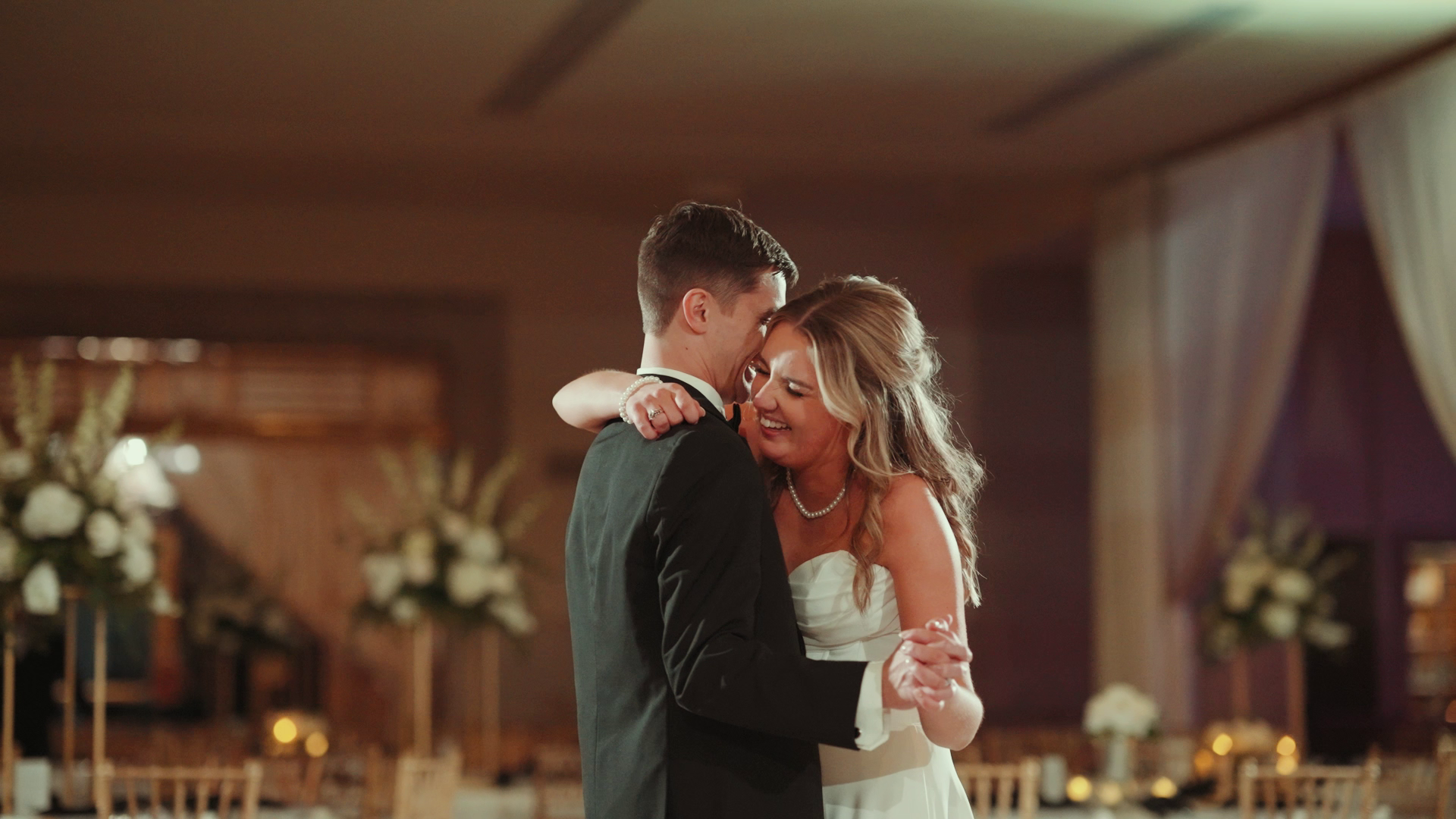
How We Captured the Most Epic First Look Ever
A wedding first look should feel private, emotional, and real—not staged for a crowd of phones. In this behind-the-scenes breakdown, we share exactly how we filmed one of the most epic first looks we’ve ever captured, from choosing a cinematic location and protecting the timeline to miking both partners for crystal-clear audio. If you want a first look that hits you right in the chest and looks like a movie, this is how we do it.
If you’ve ever wondered why some “first look” moments hit you right in the chest (and others feel a little… staged), it usually comes down to one thing: intention. Not just where it happens, but how it’s planned, how it’s filmed, and how comfortable the couple feels in the moment.
Here’s a behind-the-scenes look at how we captured one of the most epic first looks we’ve ever filmed—and how you can set yours up to feel natural, emotional, and cinematic.
What made this first look so epic
This wasn’t epic because it was loud or over-the-top. It was epic because it felt real.
A few things lined up perfectly:
The couple wanted privacy (not a crowd with iPhones)
They trusted the process and didn’t overthink it
We built space into the timeline so nobody was rushed
Audio was dialed in so you could actually hear the emotion
That combo is the secret sauce.
Step 1: We chose a location that felt cinematic and quiet
The best first look spots do two jobs:
Look good on camera (clean background, good light, depth)
Feel good in real life (private, not chaotic, not a tourist walkway)
We looked for:
Open shade (no harsh sunlight making you squint)
A simple background (greenery, architecture, or a clean hallway)
Enough space to shoot wide and tight without being in your face
Pro tip: If the venue has a “pretty” spot that’s also the main foot-traffic area… it’s probably not the move.
Step 2: We built a timeline that protected the moment
If your first look is squeezed between hair/makeup running late and somebody yelling “WE NEED YOU FOR PHOTOS,” it’s going to feel stressful.
We recommend:
10 minutes to get into position (no rushing)
5 minutes for the actual first look (let it breathe)
10–15 minutes after for private vows, hugs, and “oh my gosh you look insane” moments
That extra time after is where the real gold happens.
Step 3: We mic’d both of them (yes, both)
This is a big one. A first look isn’t just visuals—it’s what’s said.
We mic the bride and groom so we can capture:
The shaky “hey…”
The laugh-cry
The little jokes you’ll forget you even said
The quiet “you look beautiful” that you want to remember
If you’ve ever watched a wedding film where the first look is just music and slow motion… that’s usually an audio issue, not a style choice.
Step 4: We shot it like a movie, not a surveillance camera
We’re not just standing 20 feet away zooming in.
We typically cover a first look with:
A wide shot to set the scene and show the full moment
A tight shot for faces and reactions
A moving shot (slow, intentional motion) to add that cinematic feel
And we do it while staying out of your space. You should feel like it’s just you two.
Step 5: We gave them simple direction (and then got out of the way)
Most couples don’t need choreography. They need permission to be present.
We’ll say something like:
“Take your time walking up.”
“When you tap them, just pause for a second.”
“After you see each other, don’t worry about us—talk to each other.”
That’s it. No forced posing. No awkward “hold that smile.”
Step 6: Editing made it hit even harder
In the edit, we built the moment the way it felt.
We usually:
Start with anticipation (the walk up, the breath, the nerves)
Layer in real audio (the first words matter)
Use music that supports the emotion, not overpowers it
Let reactions play out (no cutting it too fast)
That’s how you get a first look that feels like you’re right back in it.
Want a first look that feels like you?
If you’re planning your day and you want a first look that’s private, emotional, and filmed in a way that feels cinematic—not cheesy—let’s talk.
You bring the story. We’ll bring the cameras, the audio, and the calm energy to make it all feel easy.
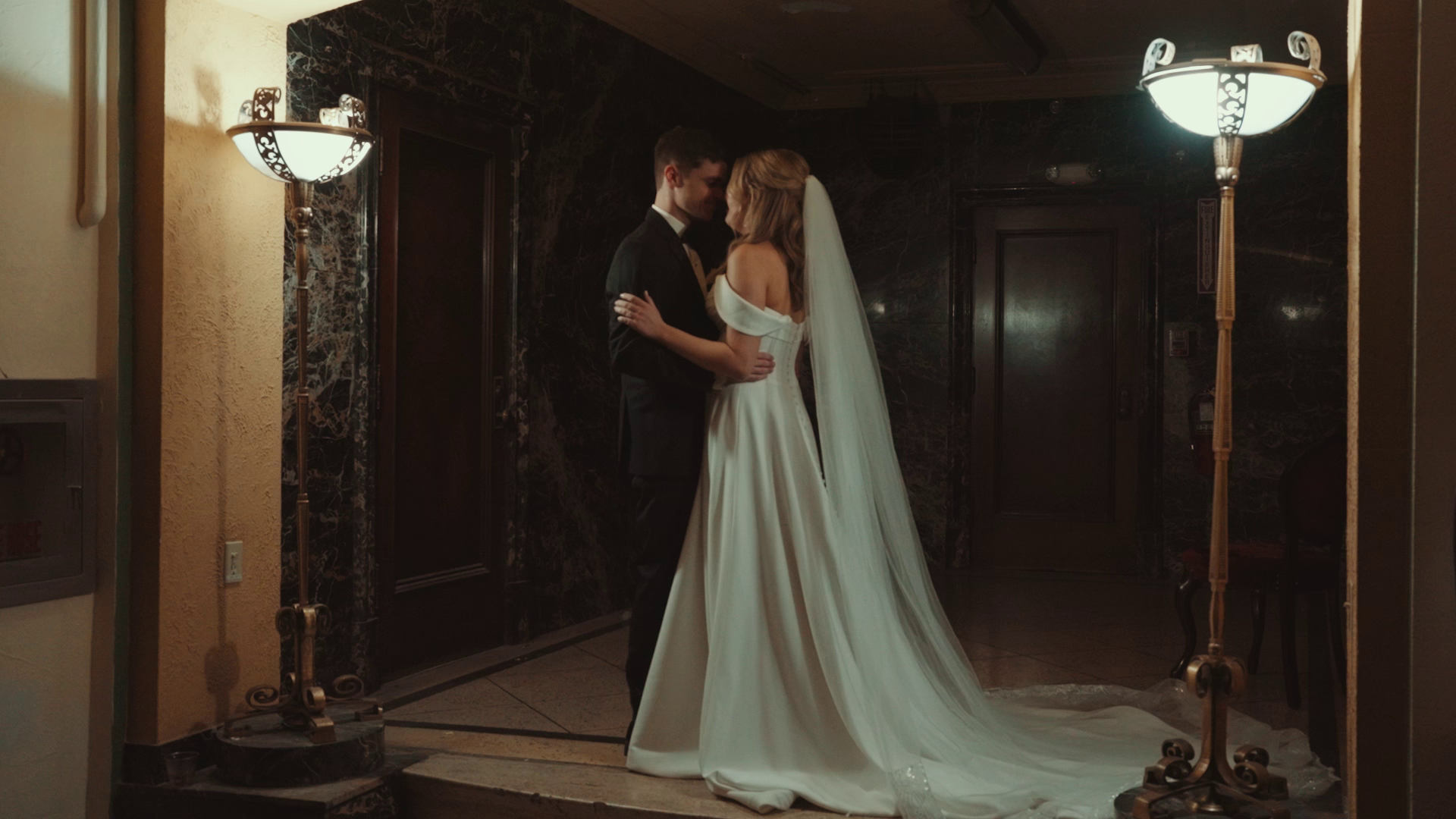
Outdoor vs. Indoor Ceremonies: What It Means for Your Wedding Video
Choosing an outdoor vs. indoor ceremony affects more than the backdrop—it directly impacts the lighting, audio clarity, and overall cinematic feel of your wedding video. Outdoor ceremonies can deliver soft, romantic natural light, but wind, traffic, and unpredictable weather can make capturing clean vows harder without professional lav mics and backup audio. Indoor ceremonies often provide more consistent sound and a timeless, intimate look, though dim or mixed lighting can be tricky without the right camera setup. If you want a wedding film that looks incredible and lets you actually hear every word, planning for light, sound, space, and a real backup plan is the difference-maker.
Choosing between an outdoor or indoor ceremony isn’t just a “pretty backdrop” decision—it changes the entire look, sound, and feel of your wedding film. Neither option is better… but they do come with different trade-offs.
If you want a video that feels cinematic and you want to actually hear your vows clearly, here’s what to know before you lock in your ceremony plan.
1) Lighting: the biggest difference you’ll see on camera
Outdoor ceremonies
Natural light can look unreal on video—soft, flattering, and romantic.
Best case: open shade, golden hour, or light cloud cover (dreamy skin tones)
Harder case: harsh midday sun (squinty eyes, heavy shadows, blown-out highlights)
Quick tip: If you’re outdoors, try to avoid a ceremony time when the sun is directly overhead. Late afternoon usually films better.
Indoor ceremonies
Indoor lighting can be gorgeous… or it can be a challenge.
Churches and venues can be dim, which can add mood but requires the right cameras and settings.
Mixed lighting (tungsten + daylight + LEDs) can create color shifts that are harder to match.
Quick tip: Ask your venue if they can keep lighting consistent (and avoid colored uplighting during the ceremony if possible).
2) Audio: the biggest difference you’ll feel
If your film is story-driven, audio is everything. This is where indoor vs. outdoor really matters.
Outdoor ceremonies
Outdoors introduces variables you can’t control:
Wind noise
Traffic or airplanes
Guests shifting chairs on grass
Water features (pretty, but loud)
What helps: professional lav mics on both of you, plus backup recorders and a plan for wind.
Indoor ceremonies
Indoors usually gives you a more controlled sound environment.
Less wind and fewer random noises
Often easier to connect to a DJ or house sound system
Watch out for: echo in large churches and venues with high ceilings.
3) Weather: the stress factor that shows up in your footage
Outdoor ceremonies
Outdoor ceremonies can be stunning—but weather can change the mood fast.
Heat can lead to shiny faces and rushed pacing
Cold can make people tense (and shorten vows)
Rain can force a last-minute location change
Quick tip: Have a real rain plan that still looks good on camera (not just “we’ll figure it out”).
Indoor ceremonies
Indoor ceremonies are more predictable.
Fewer last-minute changes
More consistent comfort for you and your guests
Quick tip: If your indoor space is tight, consider an unplugged ceremony or a seated layout that keeps aisles clear for cameras.
4) Space + movement: how cinematic your ceremony can feel
Outdoors
Outdoor spaces usually give filmmakers more freedom:
Wider angles
More natural movement
Cleaner backgrounds (if the ceremony is positioned well)
One thing to plan: what’s behind you. A parking lot, trash cans, or random signage can sneak into shots.
Indoors
Indoor ceremonies can be beautiful, but space can be limited.
Some churches restrict where cameras can be placed
Tight aisles can limit movement
Quick tip: Ask your venue about any filming rules ahead of time so there are no surprises.
5) The “feel” of the film: outdoor vs. indoor vibes
This part is personal—but it matters.
Outdoor ceremonies often feel airy, bright, and natural.
Indoor ceremonies often feel intimate, dramatic, and timeless.
If you want a moody, emotional, cinematic look, indoor can be perfect. If you want bright, open, and romantic, outdoor can be perfect.
A simple checklist to get the best ceremony video (either way)
Choose a ceremony time with flattering light (outdoors) or consistent lighting (indoors)
Mic both of you (not just the officiant)
Have a weather backup plan that still looks intentional
Ask the venue about filming rules and space constraints
Think about what’s behind you (yes, really)
Final thought
Your ceremony location sets the stage for your wedding film—but the best results come from planning for the stuff most people don’t think about: light, sound, space, and a solid backup plan.
If you want, tell me your venue type (church, barn, backyard, rooftop, etc.) and ceremony time, and I’ll tell you the 2–3 biggest video wins to prioritize.
I Was Ready to Quit — Until This Message Came In
When I was ready to quit wedding filmmaking, one unexpected client message stopped me in my tracks. In this post, I share the real behind-the-scenes of running a wedding videography business in Louisville—burnout, doubt, and the reminder that cinematic wedding films aren’t just “content,” they’re legacy. If you’re a wedding videographer, creative entrepreneur, or a couple searching for a story-driven wedding video, this is the encouragement you didn’t know you needed.
There’s a moment every creative hits that nobody posts about.
Not the highlight reel. Not the “booked and busy” season. The quiet, late-night moment where you stare at your calendar, your bank account, your inbox… and you wonder if you’re actually built for this.
I hit that moment.
I was tired. Not “I need a nap” tired—more like soul tired. The kind that makes you question your work, your pricing, your talent, and whether anyone even notices the effort you’re putting in.
And if you’re a small business owner (or a wedding vendor), you already know the extra layer: when things slow down, it doesn’t just feel like a business problem. It feels personal
The quitting thoughts don’t show up out of nowhere
For me, it wasn’t one big disaster. It was a pile-up of little things:
Editing late into the night, again
Second-guessing every creative choice
Comparing my work to people who seem to have it all figured out
Wondering if I should just get a “normal job” and stop stressing
Feeling like I’m always behind—on emails, on timelines, on life
And the worst part?
I started telling myself a story: Maybe I’m not good enough. Maybe this isn’t working. Maybe I should quit before I embarrass myself.
That story is convincing when you’re exhausted.
Then the message came in
I wasn’t expecting anything. It was just another day of trying to push through.
Then my phone buzzed.
A message from a client.
Not a problem or a revision request — just a simple, heartfelt message that hit me at the perfect time.
It was the kind of message that stops you in your tracks.
The kind that reminds you your work isn’t just content.
It’s memory.
It’s legacy.
It’s proof that someone’s best day mattered enough to be told well.
I’m not going to share the exact words here (some things feel sacred), but the meaning was loud and clear:
“Thank you. You captured something we didn’t even realize we’d want to remember.”
Why that one message hit so hard
When you’re deep in the work, it’s easy to lose sight of the impact it’s actually having.
You start thinking your value is:
How fast you deliver
How many weddings you book
How clean your transitions are
How trendy your edits feel
How many views your reel gets
But the real value is simpler:
You were there.
You noticed the moments.
You preserved the stuff that disappears if nobody captures it.
And sometimes, the people you served don’t realize how much that matters until later.
The truth about “quitting”
A lot of the time, when we say we want to quit… we don’t actually want to quit.
We want relief.
We want a break.
We want to feel like our effort is worth something.
We want to stop carrying the pressure alone.
That message didn’t magically fix my schedule or my stress.
But it did something more important:
It reminded me why I started.
If you’re in that season right now
If you’re reading this and you’re in your own “I’m done” moment, here’s what I want you to hear:
You’re not weak for feeling it.
You’re not behind because you’re tired.
And you’re definitely not the only one who’s ever thought about walking away.
Before you make a permanent decision in a temporary season, try this:
Zoom out. Look at the work you’ve done in the last year. Not just the numbers—look at the people you served.
Get honest about what’s burning you out. Is it pricing? Boundaries? Over-delivering? Lack of systems?
Ask for proof. Go read old reviews. Rewatch a film you’re proud of. Screenshot the kind messages.
Take one small step. Not a full reinvention. Just one step that makes next week easier.
You don’t need a motivational quote.
You need a reminder that your work matters.
The takeaway I’m keeping
I’m still going to have hard days.
But now I’m saving those messages.
Not for ego.
For fuel.
Because on the days I forget my own value, I want receipts.
And if you’re a client reading this—know this:
When you send a kind message to a small business owner, you might think it’s just a compliment.
Sometimes it’s the thing that keeps them going.
Want to share yours?
If you’ve ever gotten a message that hit you right in the heart—or if you’ve ever sent one—drop it in the comments or shoot me a note.
And if you’re in the middle of planning your wedding and you want a film that feels like you, I’d love to talk.